











Ports de balears

ir a administración electrónica
Ir a Canal Ético

The "autonomous" port: Singapore gets ahead of the curve with port orchestration using artificial intelligence

The Balearic Islands Port Authority (APB) is analysing the model of the port of Tuas, in Singapore, as a reference for port innovation and operational efficiency. This Asian location is establishing itself as the world's first "autonomous" port, where artificial intelligence not only controls cranes or mechanical movements, but also digitally orchestrates the entire maritime logistics chain.


While most international ports are still discussing the first steps towards automation, Tuas has emerged as a living laboratory of port efficiency, with a predictive management system that can anticipate service demand, berthing times and energy consumption. Its digitalPORT@SG platform coordinates the arrival of ships, refuelling, and loading operations on a Just-In-Time (JIT) basis, reducing the total anchoring time by 20%.


The technological heart of this model is an ecosystem of more than a thousand Automated Guided Vehicles (AGVs), connected through a private 5G network. Unlike traditional systems, these devices do not rely on pre-installed cables or routes, but instead use LIDAR sensors and machine vision to navigate freely and adaptively through the terminal. This level of autonomy turns each vehicle into an intelligent component within a system coordinated by AI algorithms.


Energy efficiency is another of Tuas' pillars. Intelligent management systems determine the optimal time to charge the batteries of AGVs based on the cost of electricity and operational demand. This strategy not only reduces peak consumption, but also acts as a balancer for the national electricity grid, integrating the port into the overall management of the energy system.


The lesson for European port authorities, and especially for the APB, is clear: the port of the future transcends physical infrastructure. The real transformation lies in the algorithmic capacity to optimise assets, reduce emissions, and convert port operations into a digital process synchronised with the logistics and energy environment. Singapore is thus leading the way towards a new generation of smart and sustainable ports.

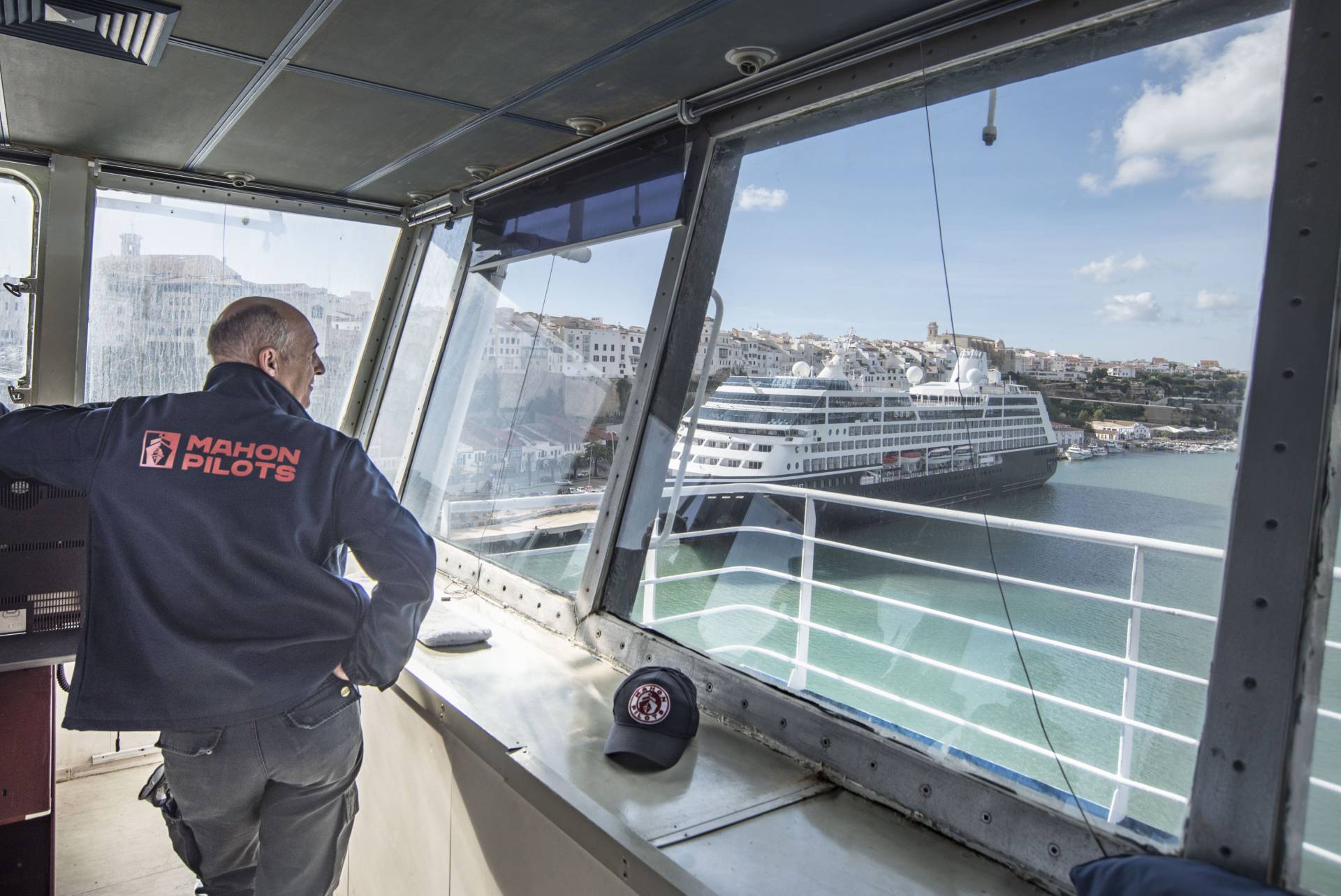
The Balearic Islands Port Authority (APB) takes a decisive step to protect the species that inhabit the port of Mahón

The Balearic Islands Port Authority (APB) is taking a decisive step to protect the species that inhabit the port of Mahón with the tender for the mapping of the distribution of habitats and sensitive species of its seabed. The project, funded with an investment of more than 330,000 euros, will provide an essential scientific tool for planning the future of the port while respecting the environment.


The port of Mahón, one of the largest natural ports in the Mediterranean, has unique environmental features that make it a space of great ecological value. With this study, the APB will be able to know precisely which species live in its waters, where they are located and in what conditions they are found, ensuring that any future action takes into account the protection and conservation of this unique environment.


The resulting maps will serve as a basis for decision-making, planning of new actions and long-term environmental monitoring, reinforcing responsible, sustainable port management aligned with current environmental regulations.


Furthermore, the project goes beyond mapping, as it includes the organisation of open 0technical and educational workshops to disseminate the results. The aim is to bring the knowledge that is created closer to citizens and professionals and to ensure that the actions and infrastructure work in the port of Mahón are carried out with greater information, care and respect for the marine environment. 


This initiative has its origin in previous experiences in the port, when it was necessary to halt works in the cove of Cala Corb when the presence of a species of coral endemic to the area was detected. This finding highlighted the importance of forward planning and having detailed and rigorous information that allows port activity to be compatible with the preservation of the marine environment.


The deadline for submitting applications to participate in the tender will remain open until March 2. With this project, the Balearic Islands Port Authority reaffirms its commitment to the protection of marine biodiversity and to a port development model that takes care of the environment that makes it possible.

Industrial circularity and energy symbiosis: the Rotterdam Port model

Rotterdam Port has established itself as a model in Europe in sustainability and advanced resource management, transforming its traditional role as a logistics hub into a circular industrial ecosystem. This model, based on energy and industrial symbiosis, demonstrates how collaboration between companies, authorities and energy actors can transform the waste of one activity into the raw material of another, driving a new blue economy paradigm applied to the port environment.


At the heart of this strategy is the Porthos project, which promotes the creation of the first European hydrogen and carbon capture (CCS) corridor. Through this shared infrastructure, the port manages the transport and storage of CO2, offering companies a new service model called “Carbon as a Service” (CaaS). This collective solution reduces individual implementation costs and speeds up the decarbonisation of the entire port community.


Rotterdam also leads pilot projects for chemical recycling and the production of sustainable aviation fuels (SAFs). Through advanced pyrolysis processes, marine plastic waste and non-recyclable industrial flows are converted into clean energy, while the port's thermal system captures waste heat from industrial plants and transports it through a network of pipes to heat homes and urban buildings. In this way, the port literally completes the thermodynamic cycle of energy in its metropolitan environment.


The real technological leap lies in the evolution of the port business model. The Rotterdam Port Authority not only manages logistics, but also administers material and energy flows, transforming the site into a circular refinery where no waste ends up in the sea. This approach meets the most ambitious goals of the European blue economy and transforms the port into a catalyst for industrial innovation and applied sustainability.


For the Spanish port platform, the Dutch case represents a roadmap towards sustainable competitiveness. While Singapore leads in terms of data management and Rotterdam in energy circularity, Spanish ports have a strategic opportunity to adapt these models through innovation funds and public-private cooperation.

  • Lighthouses of the Balearic Islands
  • Ships in Port
  • Transparency Portal
  • Air quality
  • Port Innovation Platform
  • Economic and social impact
  • Weather forecast
  • Navigation aids
  • Lighthouses of the Balearic Islands
  • Ships in Port
  • Transparency Portal
  • Air quality
  • Port Innovation Platform
  • Economic and social impact
  • Weather forecast
  • Navigation aids

Institutional documentation

  • Annual Report

    This publication details the APB’s financial situation, the technical characteristics of its public ports and provides an overview of the institution’s activities.

  • Notice Boards

    Link to the APB’s e-office which features the official notice boards on public information, human resources, public port land, and auctions, as well as other notices.

  • Sustainability Reports

    This report sets out the actions carried out to create value for the APB’s stakeholders, in compliance with its commitment to transparent management.

  • Costumer Service

    Puede contactar con el Servicio de Atención al Cliente de la APB a través de portsdebalears@portsdebalears.com, o bien mediante el canal de comunicación de quejas y sugerencias relacionadas con sus puertos y faros.

  • Statistics

    These provide a detailed picture about the traffic using the public ports of Palma, Alcudia, Mahon, Ibiza and La Savina.

  • Financial Statements

    Comprehensive information, including the audit report, of the most recent financial statements passed by the APB's Board of Directors, and given a favourable report by the Spanish National Audit Office.


ir a la sede electrónica - fondos next generation
Fondo Formulario de Contacto

Contacta con nosotros

Accede a través de este enlace a los datos de los contactos más destacados de nuestros puertos
background

About us

You have entered the Website of the Port Authority of the Balearic Islands. This is a virtual space that puts you within reach of all the services provided by the ports of general interest, which are: Alcudia, Ibiza, Mahon, Palma and La Savina...

See more


Sello Aenor. Gestión de la Calidad, norma ISO 9001. Sello Aenor. Gestión Ambiental, norma ISO 14001. Sello Aenor. Gestión de Documentos, norma ISO 30301. Esquema Nacional de Seguridad (ENS), con certificación de conformidad en Categoría Media, según el Real Decreto 311/2022.