
Industrial circularity and energy symbiosis: the Rotterdam Port model
The Dutch transition is turning Europe's largest port into a hub for blue energy and a circular economy
Palma
29/01/2026- Industrial
- Medio Ambiente
Rotterdam Port has established itself as a model in Europe in sustainability and advanced resource management, transforming its traditional role as a logistics hub into a circular industrial ecosystem. This model, based on energy and industrial symbiosis, demonstrates how collaboration between companies, authorities and energy actors can transform the waste of one activity into the raw material of another, driving a new blue economy paradigm applied to the port environment.
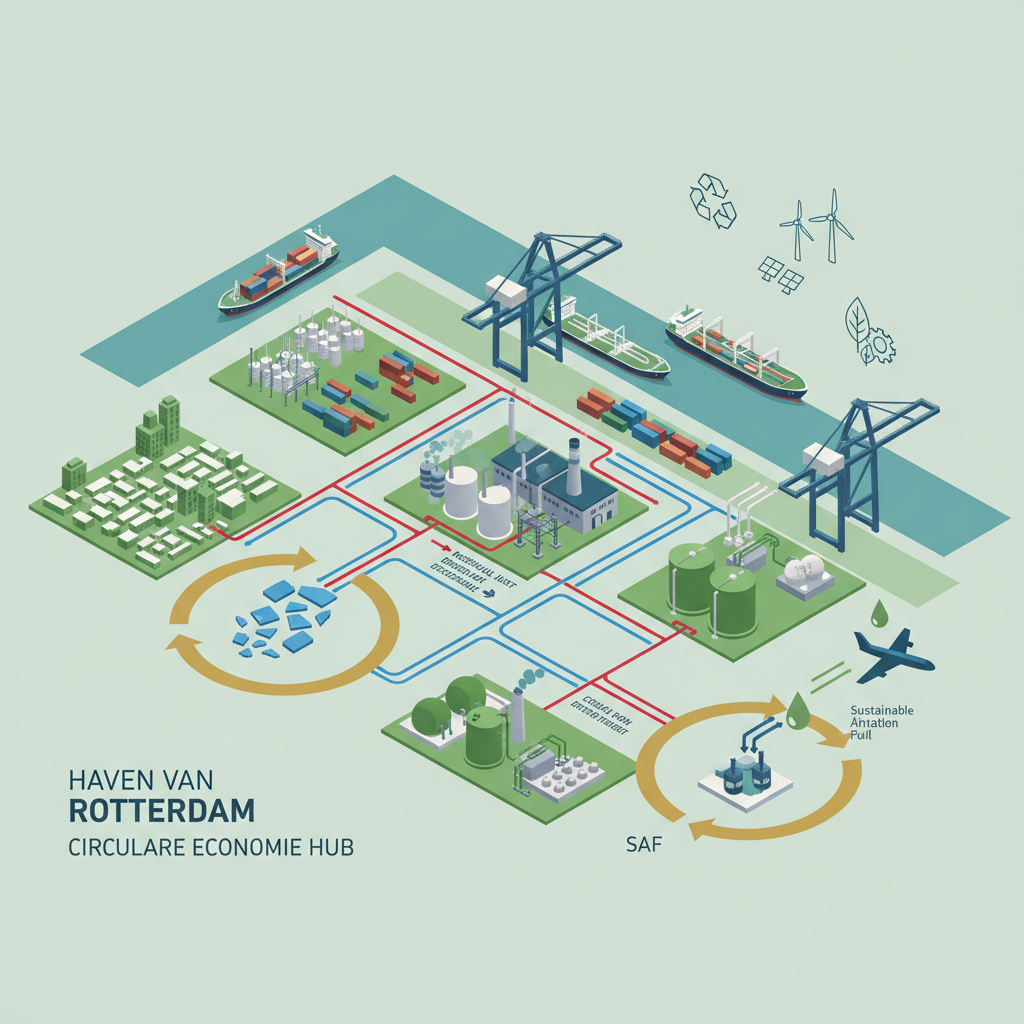
At the heart of this strategy is the Porthos project, which promotes the creation of the first European hydrogen and carbon capture (CCS) corridor. Through this shared infrastructure, the port manages the transport and storage of CO2, offering companies a new service model called “Carbon as a Service” (CaaS). This collective solution reduces individual implementation costs and speeds up the decarbonisation of the entire port community.
Rotterdam also leads pilot projects for chemical recycling and the production of sustainable aviation fuels (SAFs). Through advanced pyrolysis processes, marine plastic waste and non-recyclable industrial flows are converted into clean energy, while the port's thermal system captures waste heat from industrial plants and transports it through a network of pipes to heat homes and urban buildings. In this way, the port literally completes the thermodynamic cycle of energy in its metropolitan environment.
The real technological leap lies in the evolution of the port business model. The Rotterdam Port Authority not only manages logistics, but also administers material and energy flows, transforming the site into a circular refinery where no waste ends up in the sea. This approach meets the most ambitious goals of the European blue economy and transforms the port into a catalyst for industrial innovation and applied sustainability.
For the Spanish port platform, the Dutch case represents a roadmap towards sustainable competitiveness. While Singapore leads in terms of data management and Rotterdam in energy circularity, Spanish ports have a strategic opportunity to adapt these models through innovation funds and public-private cooperation.