

The "autonomous" port: Singapore gets ahead of the curve with port orchestration using artificial intelligence
The Tuas model redefines global maritime management by combining autonomous vehicles, smart energy, and just-in-time coordination
Palma
02/02/2026- Otros
The Balearic Islands Port Authority (APB) is analysing the model of the port of Tuas, in Singapore, as a reference for port innovation and operational efficiency. This Asian location is establishing itself as the world's first "autonomous" port, where artificial intelligence not only controls cranes or mechanical movements, but also digitally orchestrates the entire maritime logistics chain.
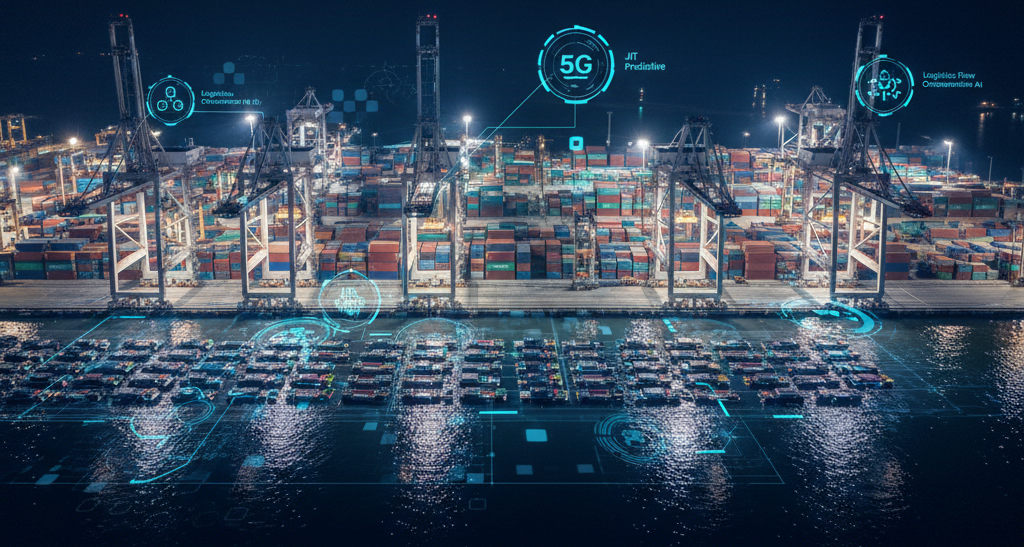
While most international ports are still discussing the first steps towards automation, Tuas has emerged as a living laboratory of port efficiency, with a predictive management system that can anticipate service demand, berthing times and energy consumption. Its digitalPORT@SG platform coordinates the arrival of ships, refuelling, and loading operations on a Just-In-Time (JIT) basis, reducing the total anchoring time by 20%.
The technological heart of this model is an ecosystem of more than a thousand Automated Guided Vehicles (AGVs), connected through a private 5G network. Unlike traditional systems, these devices do not rely on pre-installed cables or routes, but instead use LIDAR sensors and machine vision to navigate freely and adaptively through the terminal. This level of autonomy turns each vehicle into an intelligent component within a system coordinated by AI algorithms.
Energy efficiency is another of Tuas' pillars. Intelligent management systems determine the optimal time to charge the batteries of AGVs based on the cost of electricity and operational demand. This strategy not only reduces peak consumption, but also acts as a balancer for the national electricity grid, integrating the port into the overall management of the energy system.
The lesson for European port authorities, and especially for the APB, is clear: the port of the future transcends physical infrastructure. The real transformation lies in the algorithmic capacity to optimise assets, reduce emissions, and convert port operations into a digital process synchronised with the logistics and energy environment. Singapore is thus leading the way towards a new generation of smart and sustainable ports.